Those of you familiar with my blog know I don't treat Tristen like he has autism. He and his brother have the same expectations. We don't excuse him from responsibility. When Tanner has asked us questions about his brother, we tell him he has a more difficult time learning than he does. We don't go into detail...ESPECIALLY causation. It's a tough enough world out there for an adult who proclaims their child was vaccine injured. You have to have the facts to back up your statement, and my kids don't remember all the facts. They know we don't get shots because the ingredients in them are toxic, and their immune systems are not strong enough to combat them. This eases their minds and they feel good about it.
But I've never said, out loud, in front of my autistic son that his brain was damaged by a vaccine. I never explained the exact ingredients in vaccines that are dangerous.....until yesterday.
The boys are studying the periodic table in science class. Tanner is telling Tristen how he had to do a report last year in school on Mercury.
"Yeah, supposedly the mercury in thermometers was poisonous, so they stopped using it. I couldn't even read a lot about it or find pictures of anything interesting because everything was blocked on the school's computer. I don't even know if Mercury really is poisonous."
I explained to him the history of the men who used to make hats out of leather. I told them how they used mercury to treat the leather before they sold it to people. I asked them if they remembered the "Mad Hatter" from Alice in Wonderland. They said they did. I told them that was where the saying came from...."Mad as a Hatter" because the "Hatters" or the men who made hats started acting silly and goofy.
Tristen says..."Wait, Mom....is that what happened to me?"
How do you answer that? Can I be sure it was the mercury in the vaccine? Or was it just the vaccine in general given at two days old that caused his encephalitis? Or was it a combination of having the vaccine at two days old and then nursing from a mother who had just received the MMR? We will never know for sure, all we DO know is the symptoms of regression were clear after that vaccination.
I said, "Do you think you are silly like the Mad Hatter?"
"Sometimes." He said very seriously....he stared to the side....deep in thought.
I wish I could give him a definite answer. In my mind, it doesn't really matter exactly, because we are healing him now the best way we know how.
How will this effect his self image?
After leaving the conversation alone for a little bit, I came back to talk to him about it...just the two of us. I told him how proud we were of him for doing so well in school. I told him he was very smart and a very good boy who made choices to be a good person every day.
I asked him if he had any worries.
"Is there anything you are worried about, Tristen?"
"Do you worry about being different than other kids?"
He told me he liked Legos. I said that lots of kids liked Legos.
Then....very quietly....he said, "I'm worried I will grow up and have a brain like Dad."
My heart stopped.
"Honey, you don't have to worry about that. Dad's brain changed from the war....you aren't going into the army and going to war, are you?"
"Nope."
"See....so no more worrying, ok?"
"Ok, Mom"
When we think these special kids don't understand....sometimes they understand what they need to understand....and sometimes it's deep and profound.
He knows his Dad's temperament has changed since being in Iraq, and he knows he doesn't want to be that way. And somewhere...deep down....he knew Mercury had affected him....even though he didn't know how.
Now that's a smart kid :)
Wednesday, October 16, 2013

Friday, September 27, 2013
Can you see the Baby Steps? Teaching Autistic Children
In my 15 year old autistic son's IEP (an educational plan put together by his teachers), one of his goals is to spontaneously engage in conversations with his peers.
I'm not gonna lie...I HATED this goal the minute his teacher suggested it.
Here's why:
1) First of all he has autism. His disability specifically inhibits him to do this spontaneously. That is like saying a child in a wheel-chair has the goal to walk unassisted. You can't make that big of a leap....it starts with baby steps....maybe literally depending on the case.....but the fact is, in either situation, the child NEEDS TO BE TAUGHT HOW.
2) Whenever faced with the task of making a goal for a student, one should ALWAYS think...is this a reasonable request? Is this something they will need in their life? Do I really for see them accomplishing this goal, or am I setting them up for failure? No parent likes to see the same goal on an IEP year after year....it makes it look like there is no progress being made.
3)Do you already have a feasible plan of how to accomplish the goal? Can you see crossing the finish line?
Now, Tristen is very good at following rules. Almost to a fault at times, because in life there are many gray areas despite being taught "black" and "white" "always" and "nevers". It's confusing.
So, if a teacher gave him a direction, such as needing to ask a student for help before asking the teacher, he will, but it causes a lot of anxiety, because in his mind, it isn't so much of the social interaction he is shying away from, it is more the worry that the student won't know the answer either or will give him the wrong answer. He wants to go to the teacher, because they always have the right answer.
It also is not in his wiring at this point to WANT friendships. That is the kind of autism that is specific to Tristen. He has NEVER asked to have anyone over for his birthday. He has NEVER asked for a play date or to have a friend "hang out". He prefers to sit alone. And from years of observation and knowing this child from birth, it has less to do than fear of social interaction and more to do with not liking what the person is doing or eating.....especially eating!
I see him now, as a teenager, being a bit more shy around girls, and less likely to give eye contact. I think that is age appropriate, although it manifests itself in a more autistic way.
When he finds out someone has the same interest as he does, he will talk to them, and be excited to do so, about that topic.
For example, his uncle liked Pokemon as a kid. Once, he saw Tristen playing with Pokemon cards and he talked to him about it. He later brought in his old cards and videos to show him. From then on, whenever his uncle came over, Tristen would be excited to talk to him about Pokemon.
It makes sense to me, then, if I were to teach a child like Tristen about making friends, I would start by teaching him how to ask someone what there interests are to see if he can make a connection, before simply expecting him to make a friend who he wants to sit by at lunch everyday.
Baby steps.
To have a job and be out in the community, social skills are essential. I focus more on manners than friendships. People can get along without having lots of friends.
In our home school "Skills" class we talk about social interaction. Tristen had the initial concept down.....if someone says "hi" to me, I say "hi" in return.
What it looked like:
"Hi Tristen!" (big, warm, animated smile)
"hi" as he averted his eyes from the person and quickly walked past them as quickly as he could to avoid any more interaction.)
Most of the time, as he is quickly rushing past, the person talking is trying to follow up and continue the conversation with a "How are you doing today?" which Tristen has completely ignored in his attempt to escape the situation.
So, we talked about how we have to wait for social/facial cues that someone is done talking to us before we walk away. And the only way we will know, is if we LOOK at the person's face.
The Baby Steps Look Like This:
1)You see a person. Know they will probably say "hi" to you.
2)Say "hi" in return.
3)Look the person in the face to see if they are done talking to you before you walk away. Expect a second question.
4)Answer the second question.
5)When there has been a pause in talking, you know the conversation is done.
6)End with a smile
I am happy to report that Tristen has made it all the way to step six within the first four weeks of school. We had interactions six days a week. Each day, we discussed the interactions and he was able to pick out stickers when he remembered the steps and responded appropriately.
That was enough. That's all he needed.
1)break down exactly what you want from the student
2)pick a reasonable reward for that child (stickers won't work for everyone)
Wednesday, September 25, 2013
Fill in the Blank
Finish this sentence:
If God can do anything, he can help me________.
Tristen did as he was asked. I read his paper. If God can do anything, he can help me THINK BETTER.
I had to choke back the tears that were welling up, threatening to blur my vision and give me away to the rest of the class. This is the first time my 15 year old with autism has ever talked about or shared the fact that he may be aware of his disability.
How, you may ask, could we have gotten along this far on our journey without telling him he had a disability?
Well, that is exactly what shocked his teachers last year when I asked that he not be a part of the unit "Learning about Our disabilities" in the CD classroom.
"You don't want Tristen to KNOW he has Autism?" his teacher asked, not careful to hide her judgemental tone. (I think they wanted him to wear a bracelet or T-shirt or something with his disability on it.)
Now, maybe that sort of idea worked for the students at McKinley High....they wore what made them different written on T-shirts and were proud that they were not perfect. They embraced the qualities and made being different ok.
The big difference there, isn't the fact the students from "Glee" who preformed "Born This Way", , fought most of their lives with the adjective, it was their level of understanding of life and people and relationships....all things a person with autism struggles to understand.
As parents, we have been very careful over the years how we talk about Tristen, especially in front of him. We NEVER introduce him..."this is our oldest Tristen, he has autism". Later in casual conversation we might tell the individual about him, but we don't want him to feel like he has a negative label attached to him at every introduction.
He doesn't really realize he is in special education classes. He never refers to himself as "special". (That's how he describes food that is ok for him to eat.)
As his younger brother was growing up, sometimes he would get upset and wonder why Tristen didn't have to read as long as him or have as much homework. We just told him it was harder for Tristen to learn, so we had to be understanding that things weren't always going to be the same. Tristen was ok with that. He knew school was hard for him.
In the past few years, we've talked to Tanner about how he is able to have a life his brother probably won't have. He is very understanding and very good to his brother....but we don't talk about negatives in front of his brother.
If a small child...four or five... came up to you with the dream of one day going to the moon....do you tell them how the odds aren't in his favor? Do you quickly squash his dreams and get him back to reality? "There is no way you will be smart enough to be an astronaut."
So, why don't I want my son to wear his disability proudly?
I think of the first time someone pointed out a physical flaw that I had never noticed, even though I was well into adulthood. After seeing what they saw, my self-esteem, which was not that great to begin with, took a nose dive. It's all I saw in the mirror and it made me shy away from people even more.
And then I think of my sweet boy, with no gile in his heart....pure and inocent...and someone points out he has a disability.
"You have autism. Do you know what that means? You can't relate to people. People can't understand you. You don't understand directions. You can't....you Can't....you CAN'T". All to a boy who always thought he could.
I am o.k. with telling Tristen's classmates...."Tristen doesn't like loud noises, like screaming in the lunchroom or the fire alarm." Tristen knows he doesn't like these things. It's specific to him, not necessarily autism.
So, maybe I am out of sync with the media's portrayal of High School students, and maybe I simply don't understand what the teacher's are trying to teach my son. Either way, he is MY son. I know him best. I want him built up and not torn down. I want him to believe in himself...to love himself. To know that being who he is....is ok.
There are kids who can understand their challenges. There are kids who don't. There is no excuse for educated individuals lumping them all together, instead of seeing them for the promising, unique, important individuals they are.
When that day comes, and Tristen asks me why he is different, I'll be ready. I will be gentle and explain things in a way where he will not be confused or put-down. My time-table is not someone else's time-table....and when he's ready, I'll be there....not because it fit into the lesson plans...but because it was the right time for him.
If God can do anything, he can help me________.
Tristen did as he was asked. I read his paper. If God can do anything, he can help me THINK BETTER.
I had to choke back the tears that were welling up, threatening to blur my vision and give me away to the rest of the class. This is the first time my 15 year old with autism has ever talked about or shared the fact that he may be aware of his disability.
How, you may ask, could we have gotten along this far on our journey without telling him he had a disability?
Well, that is exactly what shocked his teachers last year when I asked that he not be a part of the unit "Learning about Our disabilities" in the CD classroom.
"You don't want Tristen to KNOW he has Autism?" his teacher asked, not careful to hide her judgemental tone. (I think they wanted him to wear a bracelet or T-shirt or something with his disability on it.)
Now, maybe that sort of idea worked for the students at McKinley High....they wore what made them different written on T-shirts and were proud that they were not perfect. They embraced the qualities and made being different ok.
The big difference there, isn't the fact the students from "Glee" who preformed "Born This Way", , fought most of their lives with the adjective, it was their level of understanding of life and people and relationships....all things a person with autism struggles to understand.
As parents, we have been very careful over the years how we talk about Tristen, especially in front of him. We NEVER introduce him..."this is our oldest Tristen, he has autism". Later in casual conversation we might tell the individual about him, but we don't want him to feel like he has a negative label attached to him at every introduction.
He doesn't really realize he is in special education classes. He never refers to himself as "special". (That's how he describes food that is ok for him to eat.)
As his younger brother was growing up, sometimes he would get upset and wonder why Tristen didn't have to read as long as him or have as much homework. We just told him it was harder for Tristen to learn, so we had to be understanding that things weren't always going to be the same. Tristen was ok with that. He knew school was hard for him.
In the past few years, we've talked to Tanner about how he is able to have a life his brother probably won't have. He is very understanding and very good to his brother....but we don't talk about negatives in front of his brother.
If a small child...four or five... came up to you with the dream of one day going to the moon....do you tell them how the odds aren't in his favor? Do you quickly squash his dreams and get him back to reality? "There is no way you will be smart enough to be an astronaut."
So, why don't I want my son to wear his disability proudly?
I think of the first time someone pointed out a physical flaw that I had never noticed, even though I was well into adulthood. After seeing what they saw, my self-esteem, which was not that great to begin with, took a nose dive. It's all I saw in the mirror and it made me shy away from people even more.
And then I think of my sweet boy, with no gile in his heart....pure and inocent...and someone points out he has a disability.
"You have autism. Do you know what that means? You can't relate to people. People can't understand you. You don't understand directions. You can't....you Can't....you CAN'T". All to a boy who always thought he could.
I am o.k. with telling Tristen's classmates...."Tristen doesn't like loud noises, like screaming in the lunchroom or the fire alarm." Tristen knows he doesn't like these things. It's specific to him, not necessarily autism.
So, maybe I am out of sync with the media's portrayal of High School students, and maybe I simply don't understand what the teacher's are trying to teach my son. Either way, he is MY son. I know him best. I want him built up and not torn down. I want him to believe in himself...to love himself. To know that being who he is....is ok.
There are kids who can understand their challenges. There are kids who don't. There is no excuse for educated individuals lumping them all together, instead of seeing them for the promising, unique, important individuals they are.
When that day comes, and Tristen asks me why he is different, I'll be ready. I will be gentle and explain things in a way where he will not be confused or put-down. My time-table is not someone else's time-table....and when he's ready, I'll be there....not because it fit into the lesson plans...but because it was the right time for him.
Tuesday, September 17, 2013
If You've Met One Person Hit By a Bus....
In the autism world there is a saying...."If you've met a child with autism, then you've met one child with autism." This is an attempt to describe what is called the Autism Spectrum. Autism is a spectrum disorder because there are varying degrees of severity. Some may not be able to talk, while others may go about public places unnoticed.
When my son was diagnosed at two years old in 2000, the diagnostic criteria was broke into three categories. Social, Speech and Development. He could not talk or point to objects. He did not babble. He was a "picky-eater" and had trouble sleeping. He lined up toys instead of playing with them appropriately. He did not come when he was called, and seemed overly determined.
Rashes and Fevers and Strep and Ear Infections and Vomiting weren't even considered.
At that time, he was thought to be too loving to his family and baby brother to fit the criteria for autism under the Social category. No speech...check. Development wise he didn't act like a typical toddler...didn't make eye contact....not meeting milestones....check.
After reading the evaluation reports from the early intervention team, and passing the hearing test, the Neurologist, who met us just that time, observed for a few minutes and decided Tristen was on the Autism spectrum....he had Pervasive Developmental Delay, Not Otherwise Specified.
I soon learned it was easier to just say "autistic" when people questioned his odd behavior....at least people had seen Rainman. PDD NOS was too hard to explain in the beginning.
When he was eight, we moved to Michigan and he was evaluated by the school psychologist who observed him a few times in the classroom.
"Mrs. Davidson, I think there must be some mistake, Tristen does not seem to have autism...not that I can see anyway."
I told him how to "poke the bear".
"Take him out in the middle of class to test him without giving him warning. Stop him from completing work and tell him it's time to go. Change his schedule. Have you had any fire drills?" The list of ideas continued.
Later that week, I received a phone call saying not only did they see the autistic traits, they had been able to label him autistic using the GARS assessment from the staff which ensured him special education services.
When a person meets a child with autism, what it comes down to is severity and expectations and experiences. Who do you know already with autism? That first person you meet you will judge all the rest against....which was tough as Tristen grew up because most people's reference was Raymond Babbitt. Either they were confused because he didn't act like that, or they were curious to know what special ability he had so they could be amazed and entertained....
Well, that's not how it works.
If you've met one person hit by a bus, you've met one person hit by a bus.
Just because two individuals were injured in a terrible accident, does not mean they will come away with the same injuries. They could be hit by the same bus at the same time and still have different injuries. There injuries could be very similar with only a few discrepancies.
That's life. That's chance. That's the unpredictability of our human form and how it works.
We know about genetics. That applies here as well. One person could have genes where they quickly recover. Maybe one person's background makes them flinch a little less than the other's. One could have a simple fracture, the other could die.
What about the bus? How big was it? How fast was it going? How old were the victims at time of impact? Were they trying to get away, or did they not see it coming.
There are thousands of scenarios that could be played out to decipher what kind of injuries a person would have after being hit by a bus.
"If you've met a child with autism, you've met ONE child with autism."
There is injury there. Somehow, there little bodies were injured and couldn't recover completely. Some have life-long pain and their injuries seem to be worse than others.
***I move to a new place, and introduce my son to new people.
"He seems fine."
"Doesn't he flap or walk on his tip-toes?"
Looks of confusion at my boys...."Which one has the autism" ( this says more about Tanner than it does about Tristen)
"He will be fine, don't worry about him."
On one hand, I am truly truly blessed by my Heavenly Father to grant me such a sweet and awesome and capable child that is a better human being than I can ever hope to be. I am so extremely blessed that we have come to this point, where he can not be picked out of a crowd....and as long as no one tries to talk to him, you would have no idea of his challenges.
You wouldn't know that on the way to church, we talk about how we have to answer a person's question if they talk to you. You wouldn't know we discuss how to smile politely and make eye contact.
You probably didn't see the little cues I gave him when he started to go off into his head and talk to himself....reciting his latest favorite TV show.
No one saw this morning when he had a meltdown over a new PE unit that was too difficult. The tears and the frustration...the slams of his body as he collapses in defeat.
You weren't there when we were in the ER and we had to tell the doctor this 147lb. 15 year old broke his hand spinning down the hallway.
No one else sees the delight in his eyes when we read a book at the fifth grade level and he knows almost all the words.
You can't here him now, plopping on the couch, stomping and reciting the funniest parts of movies with gusto over and over again.
Tristen has come so so far. I'm not going to have anyone take that way from him. That is what he earned for his hard work....to "seem fine"....even though he doesn't realize he wasn't fine to begin with.
Tristen is unique just as all children with autism are....and he is on a different part of his journey. One where we are working to find his place in the world because adulthood is coming up fast.
The "Bus" that hit my newborn baby was the Hep B vaccine, and his injuries are life-long. And just because when the "bus" hit a thousand other children and didn't leave a mark, doesn't mean it didn't hurt him.
Because after all...when you've met one person hit by a bus.....
When my son was diagnosed at two years old in 2000, the diagnostic criteria was broke into three categories. Social, Speech and Development. He could not talk or point to objects. He did not babble. He was a "picky-eater" and had trouble sleeping. He lined up toys instead of playing with them appropriately. He did not come when he was called, and seemed overly determined.
Rashes and Fevers and Strep and Ear Infections and Vomiting weren't even considered.
At that time, he was thought to be too loving to his family and baby brother to fit the criteria for autism under the Social category. No speech...check. Development wise he didn't act like a typical toddler...didn't make eye contact....not meeting milestones....check.
After reading the evaluation reports from the early intervention team, and passing the hearing test, the Neurologist, who met us just that time, observed for a few minutes and decided Tristen was on the Autism spectrum....he had Pervasive Developmental Delay, Not Otherwise Specified.
I soon learned it was easier to just say "autistic" when people questioned his odd behavior....at least people had seen Rainman. PDD NOS was too hard to explain in the beginning.
When he was eight, we moved to Michigan and he was evaluated by the school psychologist who observed him a few times in the classroom.
"Mrs. Davidson, I think there must be some mistake, Tristen does not seem to have autism...not that I can see anyway."
I told him how to "poke the bear".
"Take him out in the middle of class to test him without giving him warning. Stop him from completing work and tell him it's time to go. Change his schedule. Have you had any fire drills?" The list of ideas continued.
Later that week, I received a phone call saying not only did they see the autistic traits, they had been able to label him autistic using the GARS assessment from the staff which ensured him special education services.
When a person meets a child with autism, what it comes down to is severity and expectations and experiences. Who do you know already with autism? That first person you meet you will judge all the rest against....which was tough as Tristen grew up because most people's reference was Raymond Babbitt. Either they were confused because he didn't act like that, or they were curious to know what special ability he had so they could be amazed and entertained....
Well, that's not how it works.
If you've met one person hit by a bus, you've met one person hit by a bus.
Just because two individuals were injured in a terrible accident, does not mean they will come away with the same injuries. They could be hit by the same bus at the same time and still have different injuries. There injuries could be very similar with only a few discrepancies.
That's life. That's chance. That's the unpredictability of our human form and how it works.
We know about genetics. That applies here as well. One person could have genes where they quickly recover. Maybe one person's background makes them flinch a little less than the other's. One could have a simple fracture, the other could die.
What about the bus? How big was it? How fast was it going? How old were the victims at time of impact? Were they trying to get away, or did they not see it coming.
There are thousands of scenarios that could be played out to decipher what kind of injuries a person would have after being hit by a bus.
"If you've met a child with autism, you've met ONE child with autism."
There is injury there. Somehow, there little bodies were injured and couldn't recover completely. Some have life-long pain and their injuries seem to be worse than others.
***I move to a new place, and introduce my son to new people.
"He seems fine."
"Doesn't he flap or walk on his tip-toes?"
Looks of confusion at my boys...."Which one has the autism" ( this says more about Tanner than it does about Tristen)
"He will be fine, don't worry about him."
On one hand, I am truly truly blessed by my Heavenly Father to grant me such a sweet and awesome and capable child that is a better human being than I can ever hope to be. I am so extremely blessed that we have come to this point, where he can not be picked out of a crowd....and as long as no one tries to talk to him, you would have no idea of his challenges.
You wouldn't know that on the way to church, we talk about how we have to answer a person's question if they talk to you. You wouldn't know we discuss how to smile politely and make eye contact.
You probably didn't see the little cues I gave him when he started to go off into his head and talk to himself....reciting his latest favorite TV show.
No one saw this morning when he had a meltdown over a new PE unit that was too difficult. The tears and the frustration...the slams of his body as he collapses in defeat.
You weren't there when we were in the ER and we had to tell the doctor this 147lb. 15 year old broke his hand spinning down the hallway.
No one else sees the delight in his eyes when we read a book at the fifth grade level and he knows almost all the words.
You can't here him now, plopping on the couch, stomping and reciting the funniest parts of movies with gusto over and over again.
Tristen has come so so far. I'm not going to have anyone take that way from him. That is what he earned for his hard work....to "seem fine"....even though he doesn't realize he wasn't fine to begin with.
Tristen is unique just as all children with autism are....and he is on a different part of his journey. One where we are working to find his place in the world because adulthood is coming up fast.
The "Bus" that hit my newborn baby was the Hep B vaccine, and his injuries are life-long. And just because when the "bus" hit a thousand other children and didn't leave a mark, doesn't mean it didn't hurt him.
Because after all...when you've met one person hit by a bus.....
Wednesday, August 28, 2013
Friday, August 2, 2013
IEP Goals
Over the years, I have attended my son's IEP meetings, mostly interested in what progress has been made in the past year. I am curious to hear if his reading level has improved and if he is keeping up with his grade level in math. I am interested in how he copes with the day to day tasks in his school and how he gets along with staff and peers.
Every so often, a staff member would present a goal that didn't really make sense to me. I would ask questions and voice my opinion, but I never really felt like I was taken seriously. They were the professionals and they knew better. I would leave feeling anything but optimistic, and most often than not, that goal would remain on his IEP until he changed schools or professionals, and they would change it to something else.
What started becoming apparent to me as I worked as an educational assistant for children with autism, is that there was this unsaid understanding between the staff members that if you helped a child complete a certain task over and over and over again, and lessened the support over time, the child would do the task without support. This is not always the case. There has to be some sort of "desired outcome" for the student for this to work.
For example: Child will learn to button and unbutton jeans when using the bathroom.
Professionals assume that with correct prompting, a child will do this task. To me, it is as if they believe they can brain washed this child...as if they assume there is nothing going on in their heads at any given time and they will just comply to any command if practiced enough. This could not be further from the truth.
These children, verbal or nonverbal, are not computers to be programmed. They are real individuals with real thoughts and feelings....likes and dislikes. The obstacle in helping them learn is that they may not feel social pressure to do something that doesn't matter to them.
For example: In the case of the autistic child who is expected to learn to button his pants.
He may have the fine motor skills to button his pants after using the bathroom, but he has no understanding of social expectation to do so. Does this child care if he is wearing clothes? If he is seen by others in his underwear or with his pants down? If he does not, we cannot make him understand that is socially unacceptable. Over time, with lots of patience and waiting, you could teach him he was not allowed to leave the bathroom and go on with the next task of the day until he has buttoned his pants. This would be beneficial as a life long skill, but is there staff available for such a task? If it were possible to teach this way, he will learn it, but what he has learned is that he has to button his pants to leave the bathroom, not that leaving pants unbuttoned or down would be inappropriate to society.
I remember an IEP goal set for my 14 year old son, during the first year of High School. Although he attended classes and lunch with the same students he had since fourth grade, he still chose to eat alone at lunch without any social interaction. The teacher put in a goal for him to sit with his others on his own and to strike up spontaneous conversation with peers. At this time, he was only speaking to staff when he had a a question.
Yes! This would be lovely! To see Tristen being more social with his peers and having real friendships....but when you put in a goal as a professional, you should be thinking about how the student can achieve this goal. The professional assumed that in redirecting Tristen to sit with his classmates and ask them questions, he would just automatically do so over time. He has autism! Being social just does not occur to him as being important. How can you MAKE him think that is important? You can't.
Tristen is a very sweet and well liked young man. If you were to tell him everyday he HAD to sit next to a student...he would. If you told him he needed to talk to them, he would become confused and cry. He would want to know exactly what you wanted him to say to that individual. And if you told him, he would say it and then be relieved when the exchange was over and head back to his quiet spot by himself where he feels the most comfortable.
This goal bothered me because I couldn't figure out how to logically execute a teaching strategy so he could be successful. That is a part of autism I can not change. I can continue to expose him to the outside world to keep him from reverting too much into his own world, but I can't make him WANT to interact with others.
Almost a year after the introduction of this goal into his IEP, Tristen had made no progress.
This summer we were able to connect with some old friends. Tristen had another little buddy with Autism when he was in preschool....he knew him a few short years before they had to move away. It has been around 10 years since seeing his "friend", of whom he could not speak to during the time they had played together with their Thomas trains. He was SO excited to meet up with his "friend", he ran up to him to say "hello". Later, Tristen asked me how old his friend was, and I told him he should ask him. About twenty minutes later, he ran up to him and looked him in the eyes and said, "I'm fifteen years old". This was his attempt at a conversation, hoping to find out the boy's age.
When we went to lunch, it was the first time Tristen had not rushed and fought to be sure to sit by me. This time, he watched his friend and waited for him to sit so he could sit next to him. They did not talk or have a deep conversation, but I knew this was huge.
Why? Because this was HIS decision. No prompting. No training. No working. HE wanted to sit next to his friend. This was all Tristen and all his work leading him to this accomplishment. I was so proud of him and the young man he is becoming. His successes are all HIS.
Every so often, a staff member would present a goal that didn't really make sense to me. I would ask questions and voice my opinion, but I never really felt like I was taken seriously. They were the professionals and they knew better. I would leave feeling anything but optimistic, and most often than not, that goal would remain on his IEP until he changed schools or professionals, and they would change it to something else.
What started becoming apparent to me as I worked as an educational assistant for children with autism, is that there was this unsaid understanding between the staff members that if you helped a child complete a certain task over and over and over again, and lessened the support over time, the child would do the task without support. This is not always the case. There has to be some sort of "desired outcome" for the student for this to work.
For example: Child will learn to button and unbutton jeans when using the bathroom.
Professionals assume that with correct prompting, a child will do this task. To me, it is as if they believe they can brain washed this child...as if they assume there is nothing going on in their heads at any given time and they will just comply to any command if practiced enough. This could not be further from the truth.
These children, verbal or nonverbal, are not computers to be programmed. They are real individuals with real thoughts and feelings....likes and dislikes. The obstacle in helping them learn is that they may not feel social pressure to do something that doesn't matter to them.
For example: In the case of the autistic child who is expected to learn to button his pants.
He may have the fine motor skills to button his pants after using the bathroom, but he has no understanding of social expectation to do so. Does this child care if he is wearing clothes? If he is seen by others in his underwear or with his pants down? If he does not, we cannot make him understand that is socially unacceptable. Over time, with lots of patience and waiting, you could teach him he was not allowed to leave the bathroom and go on with the next task of the day until he has buttoned his pants. This would be beneficial as a life long skill, but is there staff available for such a task? If it were possible to teach this way, he will learn it, but what he has learned is that he has to button his pants to leave the bathroom, not that leaving pants unbuttoned or down would be inappropriate to society.
I remember an IEP goal set for my 14 year old son, during the first year of High School. Although he attended classes and lunch with the same students he had since fourth grade, he still chose to eat alone at lunch without any social interaction. The teacher put in a goal for him to sit with his others on his own and to strike up spontaneous conversation with peers. At this time, he was only speaking to staff when he had a a question.
Yes! This would be lovely! To see Tristen being more social with his peers and having real friendships....but when you put in a goal as a professional, you should be thinking about how the student can achieve this goal. The professional assumed that in redirecting Tristen to sit with his classmates and ask them questions, he would just automatically do so over time. He has autism! Being social just does not occur to him as being important. How can you MAKE him think that is important? You can't.
Tristen is a very sweet and well liked young man. If you were to tell him everyday he HAD to sit next to a student...he would. If you told him he needed to talk to them, he would become confused and cry. He would want to know exactly what you wanted him to say to that individual. And if you told him, he would say it and then be relieved when the exchange was over and head back to his quiet spot by himself where he feels the most comfortable.
This goal bothered me because I couldn't figure out how to logically execute a teaching strategy so he could be successful. That is a part of autism I can not change. I can continue to expose him to the outside world to keep him from reverting too much into his own world, but I can't make him WANT to interact with others.
Almost a year after the introduction of this goal into his IEP, Tristen had made no progress.
This summer we were able to connect with some old friends. Tristen had another little buddy with Autism when he was in preschool....he knew him a few short years before they had to move away. It has been around 10 years since seeing his "friend", of whom he could not speak to during the time they had played together with their Thomas trains. He was SO excited to meet up with his "friend", he ran up to him to say "hello". Later, Tristen asked me how old his friend was, and I told him he should ask him. About twenty minutes later, he ran up to him and looked him in the eyes and said, "I'm fifteen years old". This was his attempt at a conversation, hoping to find out the boy's age.
When we went to lunch, it was the first time Tristen had not rushed and fought to be sure to sit by me. This time, he watched his friend and waited for him to sit so he could sit next to him. They did not talk or have a deep conversation, but I knew this was huge.
Why? Because this was HIS decision. No prompting. No training. No working. HE wanted to sit next to his friend. This was all Tristen and all his work leading him to this accomplishment. I was so proud of him and the young man he is becoming. His successes are all HIS.
Saturday, June 8, 2013
Saying Goodbye
Typing the title of this post, my eyes are filled with tears.
I remember the first time I saw my little guy. I had started subbing for the school district to earn money to pay for biomedical treatment for my own son with autism. Some kids intrigue me. He was the first.
I started subbing almost exclusively at the school in town where they send all the autistic students. I took every job I could with them and loved every minute of it.
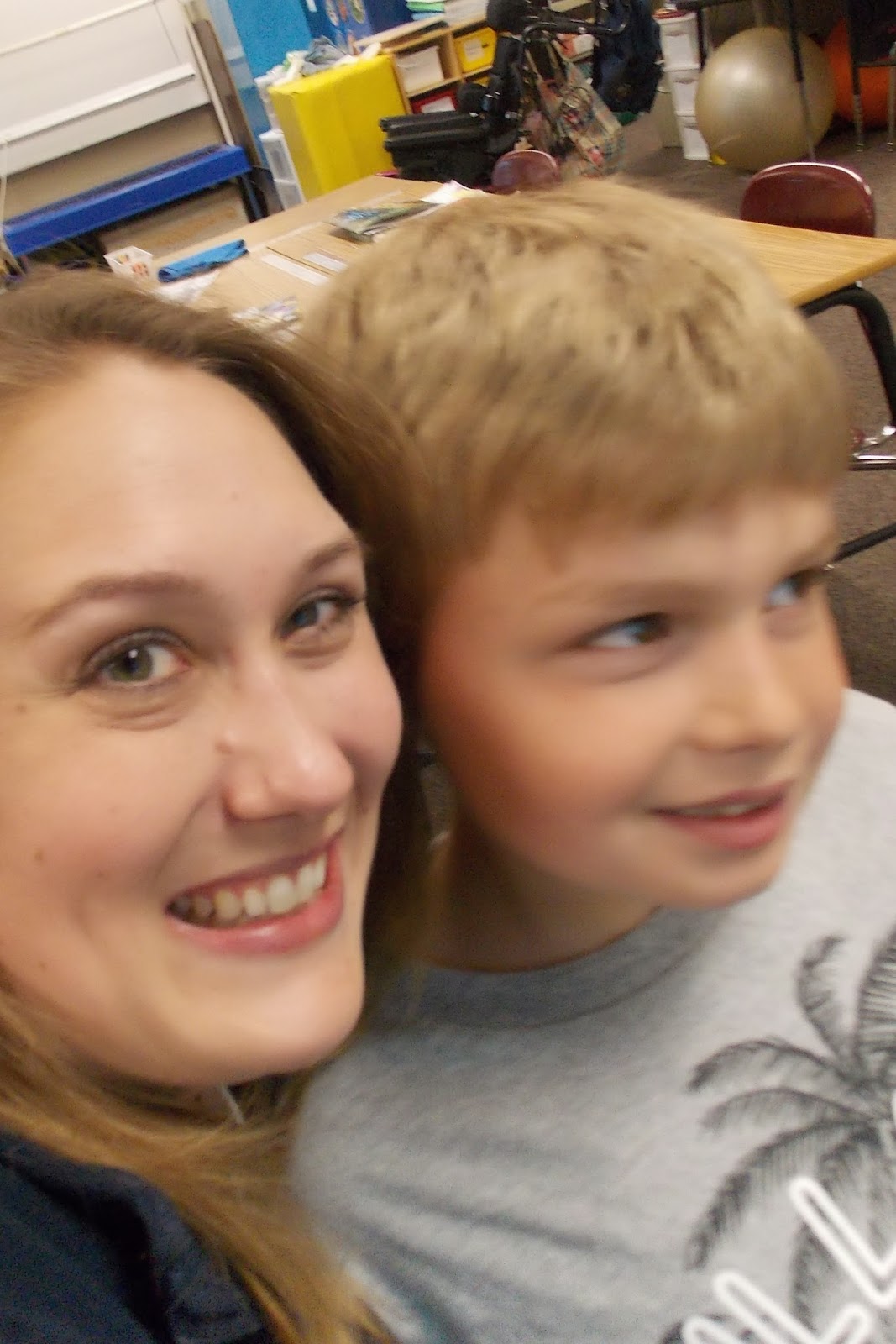
Not long into the school year, I was offered a long-term sub job for this little blonde autistic boy. We were destined to be best friends.
That was kindergarten, and I was lucky enough for that long-term sub position to turn into full-time employment and that is where I've been....he and I together for close to five years.
Thursday, I had to say good-bye.
My family is moving to the other side of the country. My husband had a job at the base here, but when the contract ended, he looked for work in the area for 15 months. His unemployment ran out in January, so he went to live with his parents to look for work there. Finally, in March he was hired.
It's been a tough road trying to support a family on an Educational Assistant's salary. Not to mention, we all have allergies, gut issues and immune dysfunctions, so our food and medical costs are higher than most. God helped us make it through, but at this point the only thing for our family to do to survive is to be together. We simply can't afford to live apart, and the boys miss their dad.
Leaving is breaking my heart.
The last day of school was torture. I had to fight back tears all day, and I am not a weepy person. I have been through a lot in my life, a lot of struggle and pain and unfairness. I don't get worked up often. I couldn't control it as hard as I tried. I swallowed over and over and over to keep the tears from falling. I breathed in and out and in and out counting the breaths. All I could think in my mind was how he wouldn't understand why I wasn't there. He was going to think I abandoned him. I will disappear.
All the "lasts" got to me. The worst was the end of the day bathroom time. Sounds ridiculous, I know, how could taking the child to the bathroom be the saddest moment?
I thought back to those first days. Those first days where I looked at him and knew he didn't need diapers. I looked into those adorable brown eyes and I saw his potential. He was smart. He could learn...and we were going to tackle potty-training together.
I thought about all the times he would get so mad at me. He would be so frustrated that I wanted him to sit on the potty and he didn't want to. I was patient and waited for him to be calm and sit for just a few minutes.
I knew once he got past his fear he would be able to accomplish it. I wanted him to know I would be there for him and he didn't need to worry. I told him it was going to be o.k.
And now, there is no struggle, no diapers, no pull-ups, no accidents and there hasn't been in years. He is so brave, he even uses all bathrooms on outings....even outhouses.
And on our last day together, as I am helping him button his shorts, he puts his little hands on my cheeks and leans in to give me a quick kiss next to my nose. He laughs and claps his hands together in his unique non-verbal way.
I want to hold him and cry for hours. I want him to know how special he is to me and if I had it my way, I would never leave him.
I think he knew something was wrong. I think that time he was telling ME, everything was going to be o.k.
My dear sweet boy, you will forever be in my heart.

I remember the first time I saw my little guy. I had started subbing for the school district to earn money to pay for biomedical treatment for my own son with autism. Some kids intrigue me. He was the first.
I started subbing almost exclusively at the school in town where they send all the autistic students. I took every job I could with them and loved every minute of it.
Not long into the school year, I was offered a long-term sub job for this little blonde autistic boy. We were destined to be best friends.
That was kindergarten, and I was lucky enough for that long-term sub position to turn into full-time employment and that is where I've been....he and I together for close to five years.
Thursday, I had to say good-bye.
My family is moving to the other side of the country. My husband had a job at the base here, but when the contract ended, he looked for work in the area for 15 months. His unemployment ran out in January, so he went to live with his parents to look for work there. Finally, in March he was hired.
It's been a tough road trying to support a family on an Educational Assistant's salary. Not to mention, we all have allergies, gut issues and immune dysfunctions, so our food and medical costs are higher than most. God helped us make it through, but at this point the only thing for our family to do to survive is to be together. We simply can't afford to live apart, and the boys miss their dad.
Leaving is breaking my heart.
The last day of school was torture. I had to fight back tears all day, and I am not a weepy person. I have been through a lot in my life, a lot of struggle and pain and unfairness. I don't get worked up often. I couldn't control it as hard as I tried. I swallowed over and over and over to keep the tears from falling. I breathed in and out and in and out counting the breaths. All I could think in my mind was how he wouldn't understand why I wasn't there. He was going to think I abandoned him. I will disappear.
All the "lasts" got to me. The worst was the end of the day bathroom time. Sounds ridiculous, I know, how could taking the child to the bathroom be the saddest moment?
I thought back to those first days. Those first days where I looked at him and knew he didn't need diapers. I looked into those adorable brown eyes and I saw his potential. He was smart. He could learn...and we were going to tackle potty-training together.
I thought about all the times he would get so mad at me. He would be so frustrated that I wanted him to sit on the potty and he didn't want to. I was patient and waited for him to be calm and sit for just a few minutes.
I knew once he got past his fear he would be able to accomplish it. I wanted him to know I would be there for him and he didn't need to worry. I told him it was going to be o.k.
And now, there is no struggle, no diapers, no pull-ups, no accidents and there hasn't been in years. He is so brave, he even uses all bathrooms on outings....even outhouses.
And on our last day together, as I am helping him button his shorts, he puts his little hands on my cheeks and leans in to give me a quick kiss next to my nose. He laughs and claps his hands together in his unique non-verbal way.
I want to hold him and cry for hours. I want him to know how special he is to me and if I had it my way, I would never leave him.
I think he knew something was wrong. I think that time he was telling ME, everything was going to be o.k.
My dear sweet boy, you will forever be in my heart.
Subscribe to:
Posts (Atom)