I wish I had been video recording.
I should have recording last year's opening presents....and the year before...and the year before.
But, I didn't.
I guess I never thought to, since it wouldn't really be anything exciting to watch later. No matter how loved the gift was...hidden under the wrapping paper and bows....it was always the same reaction.
Tristen would look at the box intently and not say a word. You could tell in his eyes he was enthralled. We always bought him something from his list that we knew he wanted, so we never thought we would see a "bad" reaction. I think if he didn't particularly care for a gift he would put it aside more quickly than the others without uttering a word.
We are quiet and watch him intently.
We longed for a shout or a gasp or a squeal of excitement. But that just wasn't Tristen's way.
"What do you think?" we would ask cautiously.
"Do you like it?"
"Yes." sometimes accompanied by his infamous half-grin.
He would take his toys and play quietly in his room for hours. We knew he liked his gifts. We knew he was happy and we had made his Christmas wishes come true.
After 16 years of this tradition we were content in it. You can imagine our surprise when this year, everything unexpectedly changed.
He waited his turn.
He started to rip off the paper.
His eyes went wide and his mouth made a large "0" shape as he sucked in the air around him in excitement....."I LOVE THIS!" He exclaimed....hardly able to contain the emotion.
What is happening? Is this my child? Is this some sort of once-in-lifetime thing?
Tristen started to squeal with glee as he started reading the package.
Josh and I looked at each other in shock.
Next gift.
We watched intently again. Maybe we imagined it....
"Minecraft!" His eyes danced and he posed holding up the shirt with a REAL smile on his face...none of the fake gumby smiles of the past.
It continued on...gift after gift.
There was no Wii U....the number one item on his list we just couldn't afford. There was no Super Smash Bros. game....second on his list. Only one thing in his top five most wanted gifts. And yet, he was over joyed and he felt it...he showed it and he shared it with us all.
Seeing him with true excitement that we had missed out on for the past 16 christmas'.....worth the wait.
I think of how I may have taken something that simple for granted; if it had always been there, I would have missed out on this feeling of witnessing a Christmas miracle.
Sharing with others the knowlege I have gained from 15 years of non-stop experience of teaching my autistic son. In this blog you will find explanations and ideas for helping special needs children reach their full potential...plus some personal stories from my son's journey.
Thursday, December 26, 2013
Sunday, December 15, 2013
Truther Talk
Here is a link to my interview with the ladies from Truther talk.
http://truthertalk.podomatic.com/
Look in the archives to find my comments after recording :)
http://truthertalk.podomatic.com/
Look in the archives to find my comments after recording :)
Sunday, December 8, 2013
I know better....
I must sound pretty presumptuous.
How do I know more than a special education teacher? Or an OT with a masters degree?
I don't have a degree.
I've only spent my entire adult life making it my personal mission to understand how to teach my autistic son. It has been my number one priority....to see the world through his eyes so I can better help him to understand it, cope with it, and be productive in it.
When I started working with autistic children, they were not all like my son. In fact, they were all different....all had different challenges with their autism that was specific to them.
So how come I think I know how to teach them?
I spend a lot of time observing them. I like to see their reactions and read their body language and facial expressions. Sometimes, I engage them in an activity or a topic by instinct. Sometimes it's trial and error.
I get a sort of sense of them. Of who they are, what they like....what motivates them. I LOVE to discover what their favorite things are and see their faces light up!
Not every idea I have had has worked. I will try something, and if I see it is not "clicking" and I can't see a way around it.... a way to tweek it to get the understanding needed....we try something else. There are some things you can get through to them, and some things you can't.
A lot has to do with whether the child cares about it or not.
I once was asked to work with a child on buttoning their pants. This was an IEP goal. This particular child did not care if his pants were buttoned. He was not embarrassed to be seen in his underwear, and would even shuffle out of the bathroom with his pants around his ankles rather than try to button his pants. We tried lots of hand over hand and prompting. But what it came down to was that he simply didn't care. It didn't bother him, so what was the incentive to do it?
These kids aren't robots. Sometimes I think educators think if we "train" them over and over and over again, they will just do it out of habit or something. I have never seen that happen without some sort of reward outcome.
Once I see the path in my mind with all the steps to teach a child a task, I will work on it every day...patiently and tirelessly. There is so much out there an autistic child can learn if we but give them the opportunity.
It's like nails on a chalkboard to me when I see a caregiver do things for a child they can do on their own simply because they don't do it fast enough. They are in too much of a hurry to let them do what they can.
Also, if the aide is more worried about participating in the class discussions herself/himself, or doing odd jobs for the teacher, or socializing, rather than focusing on how to help the child learn what he/she can out of the situation.....these are examples of how caregivers can miss opportunities to teach.
I spent some of my most productive days not talking to a single adult. When I was able to do one-on-one work, I would smile, nod or say hello in passing to co-workers, but ultimately, my mind was focused on my student. He needed me to stay focused on him so he felt safe. He needed to know I was there to be his interpreter.
Is it always easy? No. Of course it isn't. There are good days and bad days, just like everything else. But we always made it through.
With the right mind-set, we can all work together to help these children reach their full potential.
How do I know more than a special education teacher? Or an OT with a masters degree?
I don't have a degree.
I've only spent my entire adult life making it my personal mission to understand how to teach my autistic son. It has been my number one priority....to see the world through his eyes so I can better help him to understand it, cope with it, and be productive in it.
When I started working with autistic children, they were not all like my son. In fact, they were all different....all had different challenges with their autism that was specific to them.
So how come I think I know how to teach them?
I spend a lot of time observing them. I like to see their reactions and read their body language and facial expressions. Sometimes, I engage them in an activity or a topic by instinct. Sometimes it's trial and error.
I get a sort of sense of them. Of who they are, what they like....what motivates them. I LOVE to discover what their favorite things are and see their faces light up!
Not every idea I have had has worked. I will try something, and if I see it is not "clicking" and I can't see a way around it.... a way to tweek it to get the understanding needed....we try something else. There are some things you can get through to them, and some things you can't.
A lot has to do with whether the child cares about it or not.
I once was asked to work with a child on buttoning their pants. This was an IEP goal. This particular child did not care if his pants were buttoned. He was not embarrassed to be seen in his underwear, and would even shuffle out of the bathroom with his pants around his ankles rather than try to button his pants. We tried lots of hand over hand and prompting. But what it came down to was that he simply didn't care. It didn't bother him, so what was the incentive to do it?
These kids aren't robots. Sometimes I think educators think if we "train" them over and over and over again, they will just do it out of habit or something. I have never seen that happen without some sort of reward outcome.
Once I see the path in my mind with all the steps to teach a child a task, I will work on it every day...patiently and tirelessly. There is so much out there an autistic child can learn if we but give them the opportunity.
It's like nails on a chalkboard to me when I see a caregiver do things for a child they can do on their own simply because they don't do it fast enough. They are in too much of a hurry to let them do what they can.
Also, if the aide is more worried about participating in the class discussions herself/himself, or doing odd jobs for the teacher, or socializing, rather than focusing on how to help the child learn what he/she can out of the situation.....these are examples of how caregivers can miss opportunities to teach.
I spent some of my most productive days not talking to a single adult. When I was able to do one-on-one work, I would smile, nod or say hello in passing to co-workers, but ultimately, my mind was focused on my student. He needed me to stay focused on him so he felt safe. He needed to know I was there to be his interpreter.
Is it always easy? No. Of course it isn't. There are good days and bad days, just like everything else. But we always made it through.
With the right mind-set, we can all work together to help these children reach their full potential.
I miss my boy
It is almost 11pm and I need to be bright-eyed and ready to face the world at 5a.m. Somehow I'm doubting that is going to happen successfully.
I can't sleep. I'm missing my boy.
I was listening to Christmas music today and was reminded of a special song I used to sing to him.
We spent a lot of time doing sensory things together, like swinging outside and using the sensory ball. I would sing to him. For fun, I put his name into songs he liked. I don't know if anyone else knows I did that. It was kind of our special thing.
I can't say that I know what it's like to lose a child. I'm sure my sorrow in having to move away after five years is but a fraction of that pain.
Most days, I try not to think about it. I need to live in the present and be here for my family. My boys need me now, and I wasn't there for them like I should have been when I was working as an aide full-time.
The terrific thing about being an aide that I especially liked was leaving my life at the door. I could walk into the school, and tell myself I needed to focus on my student. I didn't think about bills, or grocery shopping, or what I needed to do after work. It was all about him.
I wanted to give him my full attention so I could understand his non-verbal communications. I wanted him to know my focus was on him.
Kids with autism are smart. They know when you are busy chatting or distracted by a task....and they see it as an opportunity to get away with something. Maybe not all kids....but this kid did that for sure. If he thought I was distracted his behavior would change. He would try to get into things he knew he shouldn't. You had to give the little munchkin credit....he was good!
The time I miss the most was our sensory room time together.
When I took over for his aide when he was in kinder garden, he had a lot of sensory room time. He loved to lay back on a large sensory ball, and with you sitting opposite him, he would put his legs up on your lap so you could push on his chest and bounce him. He LOVED it.
We spent a lot of scheduled time in there alone. The aide told me she got too tired of bouncing him, so she would shut him in the room and just peek at him through the window...sometimes for 45 minutes at a time, while he wandered around the room on his tip toes.
I wanted to use the time more productively. I understood his need for the sensory input/output to help him cope with the tasks set before him at school. Some days my arms would ache after bouncing him so long....but this wasn't about me.
I'd sing him songs. I'd listen to him make sounds. If he made a sound repeatedly, I would sing a song that seemed to match what he was doing.
Soon, I was able to stop bouncing him and wait. Wait in the quiet room, with no sound and no distractions....wait patiently....and he would request a song. Oh how his face would light up with the biggest grin and giggle! We were communicating! We were playing together! It was pure joy!
While it lasted....
Who knows how far we could have gone? How many more words or phrases we could have shared? How many others would he have transferred this knowledge to?
That's the sad part of being an aide. You don't have the final say.
You take direction from the speech therapist, the occupational therapist, possible the physical therapist and the special ed teacher. You do as they say. They make the rules and plan your day (for the most part.)
Someone decided he shouldn't be spending all his time bouncing on the ball. He needed to choose other things to do in the sensory room, like bounce on the trampoline.
It didn't make sense to me. First of all, if it's his sensory time, how can we tell him how to use it? I mean, what fills a sensory void for some won't work for others. Not to mention all of our work towards verbalization was put to a screeching halt.
What I have to remember is, things have changed in special education. Because of budget cuts, they are moving away from one-on-one aides. There are too many kids with severe needs, and even if I was there, I would not be able to teach him the way I believe is best for him.
I am sad because I wish I could do more. I know he is capable of more progress. But by the time these kids get to Middle School, they are so far from their peers, they are basically "contained" for the day. Less and less effort is put into teaching them....they are just there. They are fed and bathroomed. If there behavior is good, they spend a lot of time waiting while the staff takes care of the one's who are difficult.
So sad.
Not right.
Helpless.
I miss my boy.
I can't sleep. I'm missing my boy.
I was listening to Christmas music today and was reminded of a special song I used to sing to him.
We spent a lot of time doing sensory things together, like swinging outside and using the sensory ball. I would sing to him. For fun, I put his name into songs he liked. I don't know if anyone else knows I did that. It was kind of our special thing.
I can't say that I know what it's like to lose a child. I'm sure my sorrow in having to move away after five years is but a fraction of that pain.
Most days, I try not to think about it. I need to live in the present and be here for my family. My boys need me now, and I wasn't there for them like I should have been when I was working as an aide full-time.
The terrific thing about being an aide that I especially liked was leaving my life at the door. I could walk into the school, and tell myself I needed to focus on my student. I didn't think about bills, or grocery shopping, or what I needed to do after work. It was all about him.
I wanted to give him my full attention so I could understand his non-verbal communications. I wanted him to know my focus was on him.
Kids with autism are smart. They know when you are busy chatting or distracted by a task....and they see it as an opportunity to get away with something. Maybe not all kids....but this kid did that for sure. If he thought I was distracted his behavior would change. He would try to get into things he knew he shouldn't. You had to give the little munchkin credit....he was good!
The time I miss the most was our sensory room time together.
When I took over for his aide when he was in kinder garden, he had a lot of sensory room time. He loved to lay back on a large sensory ball, and with you sitting opposite him, he would put his legs up on your lap so you could push on his chest and bounce him. He LOVED it.
We spent a lot of scheduled time in there alone. The aide told me she got too tired of bouncing him, so she would shut him in the room and just peek at him through the window...sometimes for 45 minutes at a time, while he wandered around the room on his tip toes.
I wanted to use the time more productively. I understood his need for the sensory input/output to help him cope with the tasks set before him at school. Some days my arms would ache after bouncing him so long....but this wasn't about me.
I'd sing him songs. I'd listen to him make sounds. If he made a sound repeatedly, I would sing a song that seemed to match what he was doing.
Soon, I was able to stop bouncing him and wait. Wait in the quiet room, with no sound and no distractions....wait patiently....and he would request a song. Oh how his face would light up with the biggest grin and giggle! We were communicating! We were playing together! It was pure joy!
While it lasted....
Who knows how far we could have gone? How many more words or phrases we could have shared? How many others would he have transferred this knowledge to?
That's the sad part of being an aide. You don't have the final say.
You take direction from the speech therapist, the occupational therapist, possible the physical therapist and the special ed teacher. You do as they say. They make the rules and plan your day (for the most part.)
Someone decided he shouldn't be spending all his time bouncing on the ball. He needed to choose other things to do in the sensory room, like bounce on the trampoline.
It didn't make sense to me. First of all, if it's his sensory time, how can we tell him how to use it? I mean, what fills a sensory void for some won't work for others. Not to mention all of our work towards verbalization was put to a screeching halt.
What I have to remember is, things have changed in special education. Because of budget cuts, they are moving away from one-on-one aides. There are too many kids with severe needs, and even if I was there, I would not be able to teach him the way I believe is best for him.
I am sad because I wish I could do more. I know he is capable of more progress. But by the time these kids get to Middle School, they are so far from their peers, they are basically "contained" for the day. Less and less effort is put into teaching them....they are just there. They are fed and bathroomed. If there behavior is good, they spend a lot of time waiting while the staff takes care of the one's who are difficult.
So sad.
Not right.
Helpless.
I miss my boy.
Monday, November 18, 2013
Out of the Blue Exchange
The Homeland Treat That's Poisoning 90 Million Americans
http://drmicozzi.com/category/daily-dispatch
I found this in my email from a dear Midland, MI friend. Although I only lived there a year, I still feel the love from the church members there. It has been over six years since we have spoken.
I had to double check to see if she was even a facebook friend. I know I don't get any "like"s or comments from her, most likely because she and her husband are very involved in republican politics. It turns out we ARE facebook friends, and she decided long ago not to follow my posts....which I really appreciate, in a way, because if someone doesn't agree with me, I really don't want to hear about it. I don't need to know, because it consumes me with worry. And I don't like to fight.
You would think I would just choose the popular opinions to avoid confrontation.
But nobody can tell me I don't know what I know.
So, I get this strange email, that seems at first to be in support of what I already know, that Tylenol does more harm than good, and I was about to send a quaint reply. I decided I should probably read a bit more closely....and sure enough, it's propaganda from the pro-vaxers.
No...you see...you missed it! It was SO obvious! You THINK it was the vaccines?? (insert chuckle here with a pat on the back) Nooooo.....(big grin) it was the TYLENOL you gave your child BEFORE he got his shots!
I politely replied to my friend as follows:
http://drmicozzi.com/category/daily-dispatch
I found this in my email from a dear Midland, MI friend. Although I only lived there a year, I still feel the love from the church members there. It has been over six years since we have spoken.
I had to double check to see if she was even a facebook friend. I know I don't get any "like"s or comments from her, most likely because she and her husband are very involved in republican politics. It turns out we ARE facebook friends, and she decided long ago not to follow my posts....which I really appreciate, in a way, because if someone doesn't agree with me, I really don't want to hear about it. I don't need to know, because it consumes me with worry. And I don't like to fight.
You would think I would just choose the popular opinions to avoid confrontation.
But nobody can tell me I don't know what I know.
So, I get this strange email, that seems at first to be in support of what I already know, that Tylenol does more harm than good, and I was about to send a quaint reply. I decided I should probably read a bit more closely....and sure enough, it's propaganda from the pro-vaxers.
No...you see...you missed it! It was SO obvious! You THINK it was the vaccines?? (insert chuckle here with a pat on the back) Nooooo.....(big grin) it was the TYLENOL you gave your child BEFORE he got his shots!
I politely replied to my friend as follows:
Thanks, Annette :) As a community, we have known the dangers of Tylenol for quite some time, as it inhibits glutathione. Tristen's vaccine injury was at two days of age at the hospital where he was not given any Tylenol before hand. I believe since we are all individuals, one cannot say only one thing or only another thing will for certain cause autism. We must understand the human body and how the immune system works and do everything in our power to keep our children healthy. I am truly blessed to be able to rely on the spirit to guide me so I can make the best decisions possible for my children :)
Have a blessed day!
Her response:
Agreed. There is never just one answer, since we are all individual and have different
individual plans from Heavenly Father. You're a great mom!
I try very hard not to judge other's parenting decisions....none of the decisions I have made for my children have been easy. We may see situations differently. In the end, we have to live with our decisions and be able to justify them to God. I'm just doing the best I can. It has taken me a long time to learn and become comfortable with the fact that at any moment I have to be prepared to defend my decisions. They come out of the blue from anywhere at anytime. Even when I think I'm safe from judgement.
I wish I was stronger. I wish I was as brave as so many of the Mother (and father) Warriors out there who take on so much criticism and never give up for their kids. They are doing it for my child....and they are doing it for all the children in the world. I am blessed to be inspired by them.
Thursday, November 7, 2013
What We've Tried and Liked The Most
So what has helped Tristen the most over the past 15 years?
First, was my ability to be a stay at home mom. Not everyone gets this chance, but I was very blessed. Because of this, I was able to be his primary and almost sole care giver before he started school, and I could apply what I learned from my classes in the Hannen Program for understanding non-verbal wants and needs and also continue the speech and teacher services he received consistently.
Second....Diet. No doubt...it seems too simple and yet too difficult at the same time. But we saw eye contact and response to people we had not seen before. Also, health issues, like wetting the bed, rashes and allergy symptoms vanished.
Next, glutathione cream. We saw increased speech and cognition.
IV chelation. We knew we were taking a risk, but had read about it in detail and were confident in the medical staff's knowledge. Tristen jumped from a first grade reading level to a fourth grade reading level in a a matter of weeks. His urine output results showed he was passing aluminum, uranium, and cadmium, among others, at shocking levels. We saw a small amount of mercury removed.
Chiropractic. The "arc of life" is basically the curve of your neck, and when x-rayed from a side view, one can measure the degree of the arc, which is typically at 43 degrees for optimal health. Tristen's arc was at a -3. His neck was actually curving the opposite way and cutting off his brain's ability to talk to the rest of his body. He tended to rest his head on his back and look down his nose at things. After only a few adjustments, he was looking straight on at the world. He looked better. He felt better. He lost some of his autistic characteristics and became more friendly, sociable, and easy going.
"The curve in the neck is considered the most important, and has been referred to as the arc of life. This is a term coined by a neurosurgeon due to the importance of the cervical curve and the structure it protects – your nervous system. All of the nerves which control your arms, legs, torso and every one of your internal organs must flow through this area. A pinched nerve in the neck can affect every part of your body.
Alfred Brieg, MD stated that “Loss of the cervical curve (arc of life) stretches the spinal cord 5 to 7cm and produces pathological tension, putting the body in a state of disease.” Multiple studies have shown that a loss of this curve reduces lung capacity by up to 30%; decreased lung capacity has been linked to COPD, heart disease and cancer. Renee Calliet, MD concluded that “decreased curves and abnormal spinal position affects the heart, lungs and digestive system.”
http://doctorcathyw.wordpress.com/2010/04/14/the-arc-of-life/
HBOT: We did forty dives in one month. Tristen started talking about his past. He was sharing memories with us from when he was four years old. He was calmer and less distracted.
NeuroProtek: The blend of bioflavanoids have helped Tristen with is verbal expression. He is talking in more complete sentences, and using more age appropriate language. He is wanting to share his thoughts, ideas, likes and dislikes with his family. He is enjoying writing in his journal daily...writing his own sentences and getting more spelling, punctuation and grammar correctly than previously.
Essential Oils: Good things are beginning to emerge....I will keep you posted :D
In my perfect world, I would have a large house for young adults on the spectrum. I want to take the burden off the parents who constantly worry about their children's future after they age out of High School. I would train my staff to listen, have patience and to be calm and consistent with to those who are entrusted to their care. We would have a garden to grow and prepare our own food and we would teach the children why clean food is important. We would eat diets that consisted of fresh clean foods. We would eliminate wheat, dairy and soy for sure. I would have an Hyberbaric Oxygen Tank in our basement for the residents to use each day. They would get chiropractic care every week.
That's my kind of heaven :)
First, was my ability to be a stay at home mom. Not everyone gets this chance, but I was very blessed. Because of this, I was able to be his primary and almost sole care giver before he started school, and I could apply what I learned from my classes in the Hannen Program for understanding non-verbal wants and needs and also continue the speech and teacher services he received consistently.
Second....Diet. No doubt...it seems too simple and yet too difficult at the same time. But we saw eye contact and response to people we had not seen before. Also, health issues, like wetting the bed, rashes and allergy symptoms vanished.
Next, glutathione cream. We saw increased speech and cognition.
IV chelation. We knew we were taking a risk, but had read about it in detail and were confident in the medical staff's knowledge. Tristen jumped from a first grade reading level to a fourth grade reading level in a a matter of weeks. His urine output results showed he was passing aluminum, uranium, and cadmium, among others, at shocking levels. We saw a small amount of mercury removed.
Chiropractic. The "arc of life" is basically the curve of your neck, and when x-rayed from a side view, one can measure the degree of the arc, which is typically at 43 degrees for optimal health. Tristen's arc was at a -3. His neck was actually curving the opposite way and cutting off his brain's ability to talk to the rest of his body. He tended to rest his head on his back and look down his nose at things. After only a few adjustments, he was looking straight on at the world. He looked better. He felt better. He lost some of his autistic characteristics and became more friendly, sociable, and easy going.
"The curve in the neck is considered the most important, and has been referred to as the arc of life. This is a term coined by a neurosurgeon due to the importance of the cervical curve and the structure it protects – your nervous system. All of the nerves which control your arms, legs, torso and every one of your internal organs must flow through this area. A pinched nerve in the neck can affect every part of your body.
Alfred Brieg, MD stated that “Loss of the cervical curve (arc of life) stretches the spinal cord 5 to 7cm and produces pathological tension, putting the body in a state of disease.” Multiple studies have shown that a loss of this curve reduces lung capacity by up to 30%; decreased lung capacity has been linked to COPD, heart disease and cancer. Renee Calliet, MD concluded that “decreased curves and abnormal spinal position affects the heart, lungs and digestive system.”
http://doctorcathyw.wordpress.com/2010/04/14/the-arc-of-life/
HBOT: We did forty dives in one month. Tristen started talking about his past. He was sharing memories with us from when he was four years old. He was calmer and less distracted.
NeuroProtek: The blend of bioflavanoids have helped Tristen with is verbal expression. He is talking in more complete sentences, and using more age appropriate language. He is wanting to share his thoughts, ideas, likes and dislikes with his family. He is enjoying writing in his journal daily...writing his own sentences and getting more spelling, punctuation and grammar correctly than previously.
Essential Oils: Good things are beginning to emerge....I will keep you posted :D
In my perfect world, I would have a large house for young adults on the spectrum. I want to take the burden off the parents who constantly worry about their children's future after they age out of High School. I would train my staff to listen, have patience and to be calm and consistent with to those who are entrusted to their care. We would have a garden to grow and prepare our own food and we would teach the children why clean food is important. We would eat diets that consisted of fresh clean foods. We would eliminate wheat, dairy and soy for sure. I would have an Hyberbaric Oxygen Tank in our basement for the residents to use each day. They would get chiropractic care every week.
That's my kind of heaven :)
Wednesday, November 6, 2013
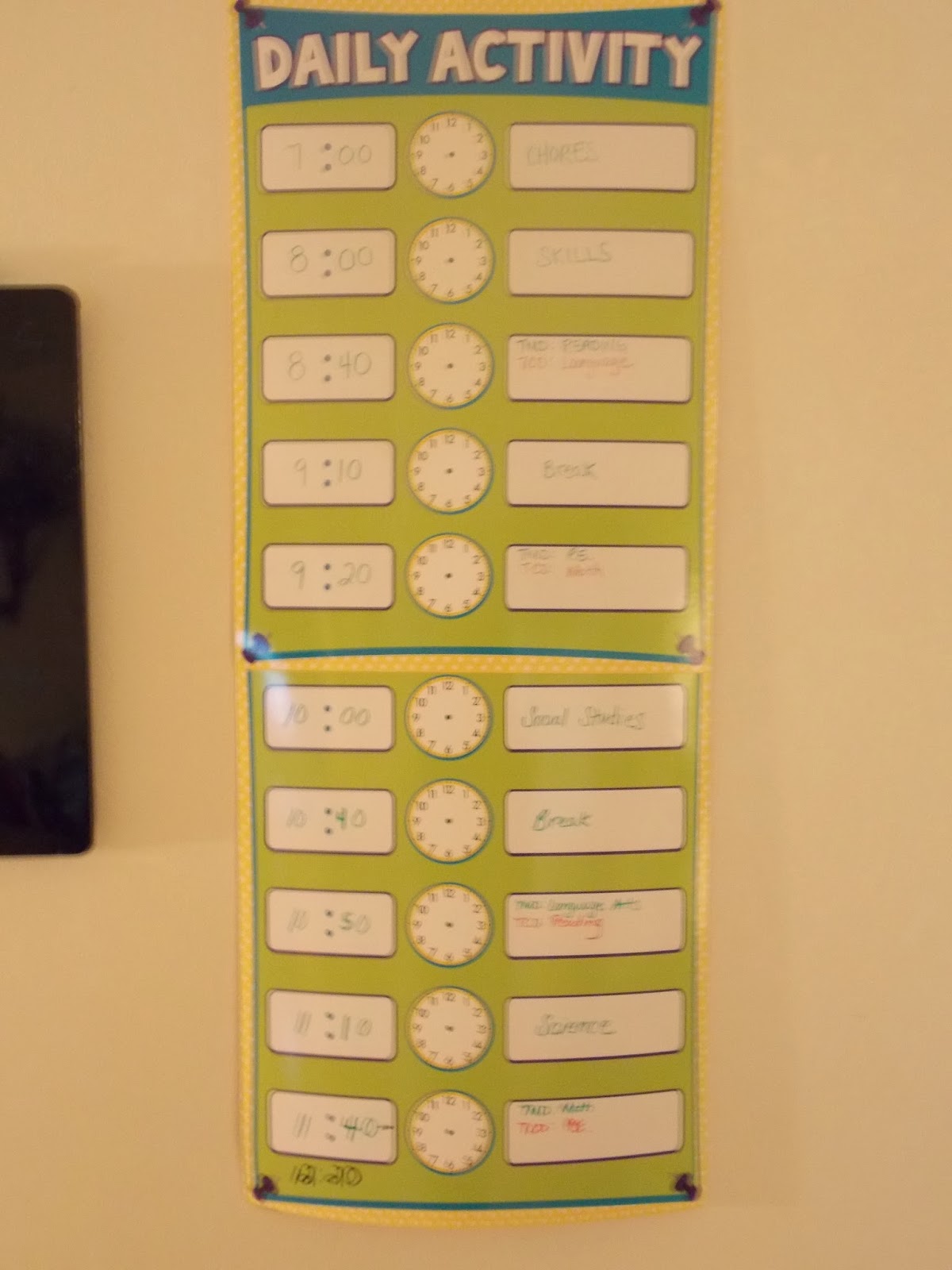
What a Day of Homeschooling Looks Like for Us
We start our morning at 5:20 a.m.
Tristen and I get dressed, eat breakfast, and take our vitamins and supplements. Tristen starts his chores, and we head out the door to be at Seminary by 6:30. This is a church class for kids in High School where we study scripture. Here we practice social skills, answering questions, making eye contact, and paying attention in general. Tristen gets stickers and after he gets five he earns a special cookie.
We start our first class at 8:00, so when we get home from seminary, I do prep for the day and the kids get their chores done. They do things like sweeping, vacuuming, dishes, dusting, dishes, bathrooms, feeding and watering pets, and personal hygiene.
The State of Texas guidelines for homeschooling is very vague. You can obtain a curriculum from any source; used books, workbooks and/or computer or video screen; teach reading, spelling, grammar, math and a study of good citizenship.
To ensure a study of good citizenship, the boys participate in the Boy Scout program through our church. We also have discussions during different units in our Social/Life Skills class.
Social Skills: We watch videos on proper social interaction. We talk about properly responding when someone talks to you. We bake/prepare food and make personal care products. The unit we are on now, we are tackling sensory obstacles by using Essential Oils, dry brushing while listening to various composers. We made booklets about the benefits of "super-foods" and home-remedies.
Reading: Tristen has been using the "Ask Me" book series which is mostly about science. It takes us four days to read and discuss the book. If he gets excited about a topic and wants to learn more, we go to the Internet to learn more. On Friday, he does a worksheet with questions from the book that I grade as a quiz.
During Tristen's reading time, he needs me one-on-one, so I have Tanner do the 8th grade curriculum from Time4Learning.com Language Arts and LA Extensions on the computer.
P.E.: I use the Texas Learning Essentials to guide me in building a curriculum that benefits both of my children. They do 30 minutes of a workout on the treadmill every day. While exercising, they watch educational shows about health and wellness. Then, they do chiropractic neck and spine exercises to better keep them aligned.
Math: Tanner is able to continue with the Time4Learning website in the Honors Algebra program. He is very independent with few questions. He does lessons, worksheets, quizzes and tests. I go over his grades and we re-do lessons together if he did not understand the material.
For Tristen, Math is a strong point, but he is still not at grade level. Some things he gets extremely easily and does without assistance. Other concepts are too difficult and I help him though. We have used Khan Academy online, and Elementary Advantage Advanced Math for 4th, 5th, and 6th graders, and because it is at his level, and he is able to be tested and get a C or above unassisted. We also do money skills every Friday.
Social Studies: I had a hard time finding an appropriate program for Tristen he could do independently. Much of what he read he did not understand or retain. Tanner, using the Time4Learning program, was having the same trouble at his grade level. I decided to combine them and teach this class myself, using the text, worksheets, quizzes and tests from the website, but I modify them for Tristen and explain more in discussion form for Tanner. Both of their attitudes have changed and they are now enjoying our discussions about the history of the country and are much more cooperative. Tristen surprises me everyday with how much he understands!
Language Arts: Tristen works on journaling, spelling words, building sentences, typing and writing his comic book.
Reading for Tanner: Tanner struggled a lot in public school with reading. He was not very cooperative in homeschool either, until I had him read to me aloud. Now he is excited about sharing his book with me, making connections and predictions. He is becoming a more fluent reader and he is not so afraid of reading.
Science: We use a few different computer programs and learn together as a team. Texas Learning standards have 8th graders doing a lot of experiments, so that is our focus. The boys love science and enjoy the hands on interaction.
We end our school day at 12:20 for a couple of very important reasons.
1. It does not take as much time to teach a subject to two students as you would need to teach a whole class. Being one on one enables us to move on more quickly when I am sure they have a concept, rather than spending a lot of time waiting for everyone to "get it".
2. It is difficult for kids with special needs to spend much more than a half hour on a subject at a time. I know this from my experience as a paraprofessional and from teaching Tristen this past 15 years. Tanner also has a very hard time staying on task and is much more focused with a shorter time frame.
3. When Tanner was in a public Montessori school last year, they did all their work in the mornings and the afternoons were "free time". This is a common practice, and because of this, I feel our school day is appropriate.
4. Many times children with disabilities spend their days with little to no expectations. They go from one place to the next without having to do any work or have academic accountability. Tristen is learning much more than he ever has and is expected to stay on task and learn rather than to sit and daydream.
We hold classes the same days and have vacation the same days as the public schools. What you may not know about public school, is that they can have a late start or early release and still count that day as a full day of school. We, of course, do not do early release days as they do here in town.
There is also "free" time to be considered in public school, such as lunch and recess. That is counted as part of the school day, including assemblies, field trips, morning meeting, PBIS activities where they learn the school rules, centers and story time (for young children), music, art, classroom parties for holidays, etc. There is arguably time "wasted" in school that we do not have to account for in our homeschool program.
The kids are exhausted and in bed by 8:30pm.
This is just a short list of what we have been accomplishing in the past 9 weeks. I am so happy to see my children happy and learning, without the bullying and politics in a public school setting.
Subscribe to:
Posts (Atom)